Pages

Sunday, August 24, 2014

Barn Update


We have made some progress on our barn project. The concrete is almost all poured. Some of it has to wait until other steps are completed. It is going way too slow, however, as my husband has done the majority of the work by himself. The help he had hoped to have is by necessity busy with their own farm work and I am at my factory job nine to ten hours a day. He doesn’t have the heart to bring me out there to help after being on my feet that long, but sometimes I don’t give him the choice and he doesn’t have a choice. He has to have help. We also have our own farm work that has to be done, like baling hay and putting up silage, building fence so the cows can go to other pastures, etc. As a result, he has lost about twenty or thirty pounds. At his old job he had become pretty sedentary and needed to lose that weight, but not all at once like that. He works in rain and in extreme heat. I’m not home to make him sit down in the cooler areas and rest and drink something so he is getting over heated. Is that a man thing?


We got the plastic sheeting on yesterday. The blew it all around me. Did I ever mention I'm claustrophobic. This was a problem!


(I did notice this morning that since he isn’t working that stressful job he retired from his hair that had gone almost all white is actually turning black again. He isn’t using any hair products either. How fair is that? I’m going grey and he’s going back to normal! Ugh!)

The weather has also been a factor. At first, we couldn’t buy rain, and the crops really needed it, even if it did interfere with building. At this point there isn’t anything he can do alone inside the barn (the parlor) by himself when it rains, so we need it to stop so he can do the outside stuff. We also really need to dry-in the milk house. We are going to put one of those chemical resistant garage floor finishing kits on the floor of both the milk house and the parlor pit (walls too in there) but the temperature has to be above a certain point and the humidity below a certain point. Now that the concrete that will be coated has reached the curing time needed, the rest is not cooperating. Some days it’s hot and others it’s too cool, but it keeps raining and the humidity is too high.

I helped put the underlayment on the outer walls and the plastic sheeting (to stop wind from getting through) on the walls and put the windows in yesterday. My brother-in-law came today so the tin is going up, albeit with difficulty because that wind is really cooking out there. Next will be the vinyl siding and the doors. Then, we can get down to the inside of the milk house and finishing that parlor. Yeah. Still, we at least a month behind schedule. That’s one more month for me at that factory I loathe. All I can say is it is a job. 

I’m taking a break to get some laundry done, so don’t worry; I’ll be back out in a few minutes!
In spite of severe vertigo in high places, I am going up and down a very tall ladder to hand tools and whatever is needed. I’m the gopher! 

Putting on the roof.

I also take cold beverages to the guys, because they won’t take a break when they need to, so I have to enforce some sort of safety. Speaking of safety…Yes, there is a reason I told my husband to keep track of all the nails that got pulled out during destruction of the old building and ones they drop or that get bent. I don’t want anyone to step on them, much less the dog who has no sense of danger until she lands on something that goes through her paw and that would just about kill me if she got hurt. Yesterday my husband comes in the house and declares he needs my help in the bathroom. I raised an eyebrow. Something was up. Yep, he stepped on one of those 16 penny common nails. It went right through the boot and into the bottom of his foot. Boot and all went right into the bathtub. He is on blood thinners due to three stress related heart attacks so I am panicking, even though I am trying to remain calm on the outside. Ever see arterial spray on one of those crime shows on T.V.? That nail hit a vein and it squirted something awful. His boot had about a cup of blood in it. We applied pressure using a clean but old (a/k/a didn’t mind throwing out) wash cloth and then I put a cotton ball treated with antibiotic ointment on it and taped it six ways from Sunday. A simple bandage wouldn’t do the trick, and it was right up where two toes meet the foot. After making sure it wasn’t soaking through the cotton ball, he actually put on a different boot and went back to work. *Writer shakes head* He is a tough old goat! He wouldn’t go to the ER of course, but we got it to stop bleeding. I would have really appreciated him getting a tetanus shot though. I’m going to keep a close eye on him, although I think once they show signs of the illness; it’s pretty much too late. This is why I’m so fussy (we’ll be nice and call it that) about safety. I even wear ear plugs when he’s running the power equipment or hammering on things- it makes my ears ring. We wear steel-toe shoes in case we drop something. They are awful evil things to wear, but necessary. Are you being safe while working on household projects?
 There used to be a grain bin here, but it rusted out and was in the way, so it had to go.

                           The old feed bin and a peek at the pile from the tear down. Gonna be a heck of fire one of these days.


Yes, I did brave the ladder and go as far as the trusses to get these shots. Hard to believe my kids used to sit on top of that old feed bin just look out at the countryside. They aren't afraid of much.


Saturday, August 2, 2014

Darn Weeds


Weeds are persistent little buggers. I mulched my garden to within an inch of its life with several inches of old corn silage. We hadn’t used it in years and there were no weeds growing in it at all; not even corn. It should be free of weeds now; I should be sitting pretty with my huge garden and nary a weed – right? Wrong!

My gardens have always had a particular penchant for growing weeds in spite of many back-breaking hours pulling them up and spraying deterrents between the rows being careful not to hit the veggies I wanted. Of course you can’t get anywhere near tomatoes with weed killer, such as Round Up™ because it is related to a family of weeds it kills and they will be dead just being near it. I spent days working the soil, amending fertilizing nutrients into the soil, planting the garden (three times in some places that still didn’t come up- writer growls) and mulching the plants after they came up. I tilled fervently between the rows until the plants were big enough to mulch and hoed weeds between plants. I plotted where everything had been planted so I could identify the plants from the weeds. We got too much rain at first, hence the replanting, and not enough warmth, and then the rain pretty well dried up, but there is enough moisture to hold out for a few weeks before I have to irrigate. We had a couple of hot days where the plants really took off. And then it happened.

We began a building project that took most of the weekend every weekend when I had off work to do any real time consuming work. I couldn’t even get the lawn mowed until a couple of our nephews came to help on the project so that I had a few hours to at least mow the hay field, I mean the lawn. It rained every day, which made the grass and the weeds take off they were part of a race and within two weeks there were so many weeds I couldn’t find the garden. They came up primarily in the rows with the vegetables. They still did an excellent job of invading the mulch, but mostly they turned my vegetables into a jungle. I told my husband the lamb’s quarter (most prevalent) was edible; I should just harvest it and call it a day. He said he wasn’t a cow and would not eat it. Well, darn.

I spent hours pulling weeds and not making much progress. I filled bucket after bucket on the tractor and dumped them on what will be a burn pile from the tear out of the old building materials from the barn. I looked at the carnage that had once been my garden. They take as many good plants as they do other weeds because they have intertwined their roots with the good plants and their branches with the other plants’ branches. 

The weeds are still there, waving their leaves hello. If they could talk, they would be taunting me, “I thought you were getting rid of me! Hey, where’s the vegetables?”

Saturday, July 19, 2014

Renovating a Barn

Several years ago we milked cows under a pipeline system. Let me tell you, while that is much better than hand milking and even what was once referred to as a step-saver system, it is still hard on the body. You have to squat between cows and attach the milkers to the cow's teats. This allowed for the cows to kick you if they wanted to, sometimes right in the head. A series of circumstances, including growing children who did not want to farm caused us to stop milking.

We opted to raise beef and dairy heifers which required bottle feeding powdered milk replacer and training them to eat feed and hay and drink water, just like we did with the dairy cows' calves. We also planted crops for sale.

Now we have decided to renovate that old barn and where was once a calf-raising room into a milking parlor. We had changed to using the milking cow's stalls and abandoned that section of the barn long ago. In the parlor we are building there is a central pit between two rows of cows where four cows can be milked on each side at the same time. More importantly, there is no getting kicked in the head or squatting under a cow. That is better on the knees and the old brain bucket!

In the years of non-use the milk house had been ruined from hard winters of heaving frozen ground that broke the concrete. We later discovered that someone had no only built it without a proper foundation, but on sand! This means the building will be razed, the original foundation broken the rest of the way and hauled away and all new concrete poured and a new building. Fun!

                                          Trying to pull up broken concrete pad outside the milk house.
                                           A large slab moved just to discover another one underneath.
                                                              The building coming down.
                                     It's gone! Now to demo the rest of that concrete and start over.
I rented a jack hammer this weekend. The guys at the rental center laughed asking if I was going to run it. Guess what! Yes, I did, and I broke a lot of concrete. Hopefully, weather permitting, we get the new foundation next week. Wish us luck.

                                                   Our ever present helper supervisor.

Sunday, June 29, 2014

Making Assumptions

At work the other day I asked for a scoop shovel. You see, the different work stations generate a lot of saw dust and shavings only it is made of vinyl, not wood. I operate a corner cleaner, or rather, cleaners. I run two at a time, and someone else runs one behind the ones I run, so together we made a lot of saw dust. At the end of the day we clean our work area before the next shift takes over. Unfortunately, the other machinist blows all her dust to my side and then leaves it for me. The welder, which is the process right before the corner cleaners gets some dust because the actual saws which cut their parts leave a lot of the dust on the parts and it falls off when they weld it, so they too have some to add to the mess. Several people on my side work to clean up the dust and shavings from the other side, but my section is the worst with yards several inches deep. You can see why I might want a scoop shovel rather than a large dust pan.

The problem I had was not requesting the shovel, it was the smart Alec comment from one of the hardware guys. He used to work at a saw mill and admittedly knows about working with a scoop shovel all day, and he knows I come from a farm so should not be surprised that I too know how to use one. He actually had the nerve to say I didn't know how hard it was to use a scoop shovel. The shavings and dust from the vinyl isn't actually heavy; there's just a lot of it and it takes a long time so he should have just kept his mouth shut.

I stood there ready to pound him for such a foolish comment, but the welder operator also heard him and jumped on him so I wouldn't have to. He used to work on a farm so he knew what he was talking about. "Never assume that just because she is a woman she doesn't know about hard work or how to work hard with a shovel. She could probably work circles around you!"

I thanked him, but it got me to thinking about just how much I have done with a scoop shovel. This is not exclusive to me of course, farmers, male and female, young and old, know about this dreaded tool, or as my husband calls it, a s--t spoon.

When my eldest son was only three he knew how to use one of these shovels, even though he didn't take a lot at a time, after all, he was three, but he was 'helping mom' empty a one ton pick up truck with high side panels of hog feed. We had to shovel the feed off the truck into the feeders that were taller than the truck, even with the sides on.We sometimes emptied a couple a day to get the feeders filled. After I became pregnant with our second son and got a few months along, I told my husband he was just going to have to pony up the cash and have the feed company bring their truck out to fill the feeders. He drove a truck and wasn't often home to do the job himself or he would have been doing all that shoveling.

We also had an old hay wagon someone had put 8-foot sides on to use with a combine. We planted grain sorghum and combined it into that wagon and my son and I emptied it out by hand into 55 gallon drums, filled them with water to soak the grain and a few days later used it to slop the hogs. They love soured sorghum, by the way.

We unloaded sawdust from a sawmill for the garden and liter from a turkey farm for fertilizer for garden as well.

In Wisconsin, the scoop shovel was used for cleaning behind cows, the aisle and gutter when the clean out chain refused to work, as it sometimes did (and still does), and we had one for cleaning the feed aisle of silage that had gone uneaten in order to feed it to the outside young stock and feed the fresh to the inside milking stock. I have shoveled out hog pens as well. It is all heavy work and takes quite a while, sometimes several hours. We have to clean out silos also, sometimes using a large pitch fork (another invaluable tool) and sometimes that shovel.

All of this is taken care of by all members of a farm family, regardless of age or gender as long as they are physically able. So please, never make the assumption a woman does not know how to work hard or that a child does not know how to work hard or hasn't. If we come from a farm or small family business where labor is involved, we know.

Sunday, June 1, 2014

Gardening Time Means Bugs

I love to garden so this is truly my favorite time of year. I really hate it when I go to get my gardening implements and tools are missing. I have been spending my weekends preparing my garden, even enlarging it by quite a bit, to get my veggies in. Yesterday I was going to work the garden before it got too hot and then mow the lawn, which grows as I watch it sometimes (I’d still rather the grass than snow). I ended up having to wait on a telephone call that was to be before noon but didn’t come in until three. Bummer. It was supposed to rain by Saturday night and not stop for a few days. My day was shot. I got my seeds and seed potatoes, tiller and then looked for the hoe that was supposed to be hanging on the wall of our shed next to a garden rake that is the same size. No hoe. After an exhaustive search I gave up. I lost even more time and ended up using the rake to plant. That is not easy either. I got roughly a third of the garden done.

I noticed around five o’clock gnats started swarming and by five thirty I was so overtaken by them I had to quit. I kid you not, I have welts all over my neck, face, ears, even one on one of my vertebrae on the back of my neck. They are swollen like bee stings, itch and feel bruised to the touch. The one on the back of my neck actually created a huge lump that distorted the shape of my neck and the other ones on my neck and face are so concentrated that they have affected the lymph nodes causing painful swelling all the way to my ears.  I’ve gone through about a half tube of the highest percentage hydrocortisone cream I can get and still ended up taking Benadryl last night, which only succeeded in helping me sleep; not stopping the itch.

This morning I made a drawing salve I have generally used for infected mosquito bites (it really works too). It helped the itch within minutes. They are still really red and swollen and painful though. I don’t know what to do with that. Maybe some hydrocortisone with lidocaine or aloe with lidocaine will help with the pain. I’ll have to try that next. See in the picture some of the bites. Just so you know – it’s really hard to take pictures of bites like these by oneself. Trust me; they’re huge.

                                                      Welts from bites of gnats on my neck. 

Recipe for Salve:
In a small cup (I use a 3-oz. bathroom cup) combine 1 tablespoon non-iodized salt and 1 tablespoon petroleum jelly. Mix well with something like a tongue depressor. Place a hot washcloth on affected area (to help bring venom or yucky infected stuff closer to the surface) for about a minute. Spread salve on the wound/bites fairly thick. Do not cover. As the petroleum jelly soaks into the skin the salt will start to fall off, so you will have to clean it off within about a half hour. You will see the salt change colors where the wound is. Infected wounds will turn yellow!


Clean area with a warm damp cloth. If treating an infected bite, apply an antibiotic ointment and cover with a bandage. If it is just an itchy bite, don’t cover it. Re-apply if the itching starts up again. Mine has lasted several hours so far keeping the itch at bay. The one on the back of my neck looked like a huge lump and has gone down to normal. 

Monday, May 26, 2014

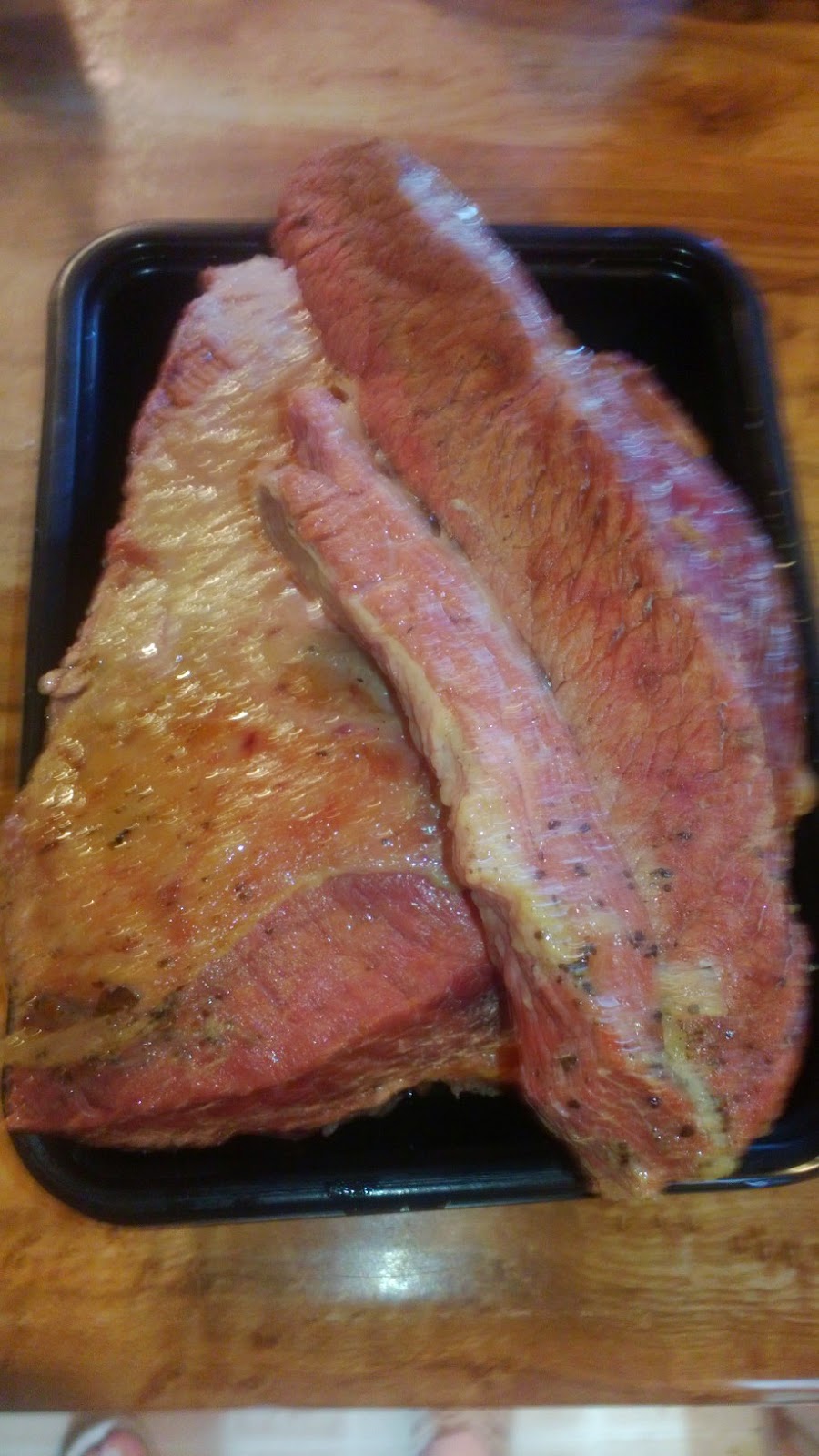
Homemade Corned Beef (A recipe and directions)

Corned Beef
When we got our last steer butchered my husband asked, as usual, what I wanted done with it. Since he used to be a butcher I usually just tell him to decide. Then he gets the brisket ground into hamburger because he doesn't like the brisket. In the store that is usually the cheaper cut and is not tender like the rest of the cuts, which is why it usually goes into hamburger or corned beef. Ever buy corned beef? I love corned beef; him, not so much. Too bad this time. I told him I wanted the brisket saved. It came in two very large slabs, so I had to cut them into smaller, more manageable pieces. I finally had the time to make it this past weekend so I went to work and thawed them out, and wouldn’t you know it, when he got a look at the smaller slabs, he decided he wanted to make bacon out of a couple of them. He said if it was raining, he’d smoke it and if not he’d be planting corn or plowing fields. It isn’t raining and I do not mess with his smoker. At any rate, after he tasted my corned beef, even he had to admit it wasn’t bad. Below is my process and recipe for corned beef.

Cut brisket into small slabs if they are cut very large. Otherwise they won’t fit into any freezer bags for marinating and I don’t have a pan or a large enough oven for them full sized.

You Will Need:
Gallon Sized Zip-Type Freezer Bags
Morton Tender Quick (gives the meat its red color and salty taste- also used to make bacon and ham)
Cooking Oil or Light Olive Oil
Water
Vinegar (Cider is best but white works just fine too)
Pickling Spice
Whole Dried Cayenne Pepper or Crushed Red Pepper (hot)
Whole Pepper Corns
Whole Bay Leaves
Whole Mustard Seed
Onion Slices
Course Canning Salt or Non-Iodized Salt

Directions:
 Rub each slab of brisket with 1/3 cup of the Tender Quick on all sides and ends/edges. Place one slab of brisket (two if they are really small) into each gallon sized zip-type freezer bag. Place one whole dried cayenne pepper or 1 teaspoon of the crushed pepper, 1 whole bay leaf, 1 teaspoon each of whole pepper corns and whole mustard seed and 1 tablespoon of the pickling spice and several large slices of onion to each bag. Add ¼ cup oil, 1 cup vinegar and 2 cups water and getting as much air as possible out of the bag, zip it shut so that nothing can leak out. Refrigerate overnight.
The next day, drain the bags and remove the slabs of meat – do not rinse the slabs- and place them into a large roasting pan along with the onion slices. Pour in just enough water to barely cover the meat (it makes its own juice as it cooks). Add 1/8 cup canning salt or non-iodized salt, cover the pan and bake at 325° F. oven for about five hours. Remove from oven and drain well. Place the cooked meat (without the onions) into a smaller pan and cover with foil, sealing well, and cool in refrigerator several hours or overnight until well cooled. Any remaining broth will congeal. Place each cooled slab (getting as much of the congealed broth as possible off the meat) into vacuum seal bags and seal. If you don’t have a vacuum sealer, then use regular freezer bags but remove as much air as possible. Freeze until ready to use or keep some in the fridge for immediate eating.

                                                        Cooked and ready to cool down
                                                       Vacuum sealed for the freezer

Please be aware that corned beef is traditionally high is sodium. You can reduce it in the cooking time if you wish, but it won’t taste quite the same.


For corned beef like you find in a can, run some of the corned beef through a food processor and freeze or refrigerate until set in a well packed freezer bowl. Just dip the bowl in some hot water and it should slide right out of the container. If frozen, thaw in refrigerator before slicing. 

Deciding to Keep the Smaller Tractor

I did some serious thinking about that tractor that tried to turn over with me. It occurred to me that it is actually mine, as in no payments, and I have quite a few implements that will not fit on anything else that is bigger (bucket, plow, disc harrow, brush cutter –commonly known by the name brand Brush Hog, a lot like a tissue is called a Kleenex- and a sprayer). The sprayer is actually made for a 4-wheeler (which we do not have) but we attached it to a pallet and stick on the rear hay forks (another implement along with the bale spear for the front). We hook the sprayer to the battery and spray away the weeds and grass from the fence rows. Bigger tractors won’t clear the stumps or trees that are next to the fence in places. I suppose I’ll have to keep it and bale smaller bales. Hopefully we won’t have to deal with the knee deep mud again, but this is Wisconsin and mud is a part of the farm, especially in the rainy season.  

                                      Lots of uses for my little tractor - guess I'll keep it after all.

I decided to make my garden bigger this year to accommodate planting potatoes since I used part of it for asparagus last year and you don’t plow that up if you want to keep it growing. I needed that disc. After several trips lengthwise, I went the short way (that was fun dodging trees at the ends of the rows!) several more times just to break it up and then this weekend (a week later) I used the tiller on it. I have a Craftsman rear-tined tiller that has worked without fail for more than ten years. I love it. It will, however, work you half to death if your garden is very large, like mine is. Most people use the implements I have for deer forage plots- nothing like attracting the deer so all you have to do is sit and wait during hunting season. I don’t do that, by the way; they go after our corn and soybeans planted either for cash crops or to feed the cows so I don’t need forage plots. I could get a garden type tiller made to fit that tractor, but once the plants are up, the tractor won’t be able to go down the rows anyway.

I do have future plans for this equipment, and that includes the eventual purchasing of a tiller for it and a planter. This is way off of course, but when we lived in Florida we had what is called a truck crop farming operation. That is when you grow an acre or so of different vegetables and sell them either at farmers markets or vegetable auctions (we sold to an auction when we were in Florida). Some of our bell peppers and butternut squash and yellow squash went to grocery stores all over the country. We sold zipper peas (a variety of field peas) locally by the bushel basket. My only problem with this plan of course is that all of our land is currently allocated either to pasture or feed crops/cash crops for the animals. Hmmm, I’m going to have some figuring to do!